



Pruning an Apple Tree

Pruning an apple tree is one of the most important tasks for any gardener who wants healthy trees and a bountiful harvest. Without proper pruning, apple trees can become overcrowded, weak, and less productive. Knowing how to prune an apple tree correctly helps improve air circulation, sunlight exposure, and fruit quality.
When to Prune Your Apple Tree
Timing is crucial for pruning apple trees. The best time to prune is during late winter or early spring, just before the tree starts to bud. At this stage, the tree is still dormant, which reduces stress and the risk of disease. Avoid pruning in late summer or fall, as this can stimulate new growth that won’t harden off before winter.
If you missed the dormant season, light pruning can be done in summer to remove dead or damaged branches, but avoid heavy cuts.
Tools You Will Need
Having the right tools makes pruning easier and safer. Here’s what you should prepare:
Pruning shears for small branches up to ¾ inch thick
Loppers for branches between ¾ inch and 1½ inches
Pruning saw for larger branches
Gloves to protect your hands
Disinfectant to clean tools between cuts and prevent disease spread
Make sure your tools are sharp and clean before starting.
Understanding Apple Tree Structure
Before cutting, it helps to understand the basic structure of your apple tree. Apple trees have a central leader (main vertical trunk) and several scaffold branches growing outward. Your goal is to maintain a strong central leader and well-spaced scaffold branches to allow light and air to reach all parts of the tree.
Look for:
Crossing branches that rub against each other
Suckers growing from the base or roots
Water sprouts which are fast-growing vertical shoots on branches
Removing these will improve the tree’s shape and health.
Step-by-Step Pruning Process
1. Remove Dead, Diseased, or Damaged Wood
Start by cutting out any branches that are dead, diseased, or broken. These branches can harbor pests and diseases and reduce the tree’s energy. Cut back to healthy wood or to the branch collar (the swollen area where the branch meets the trunk or a larger branch).
2. Eliminate Suckers and Water Sprouts

Suckers grow from the base of the tree or roots and do not produce fruit. Water sprouts grow straight up from branches and compete with the main leader. Remove these by cutting them off at their base.
3. Thin Out Crowded Branches

Look for branches that crowd the center of the tree or cross over each other. Thin these out to open the canopy. This improves sunlight penetration and air circulation, which reduces disease risk and helps fruit ripen evenly.
4. Maintain the Central Leader and Scaffold Branches
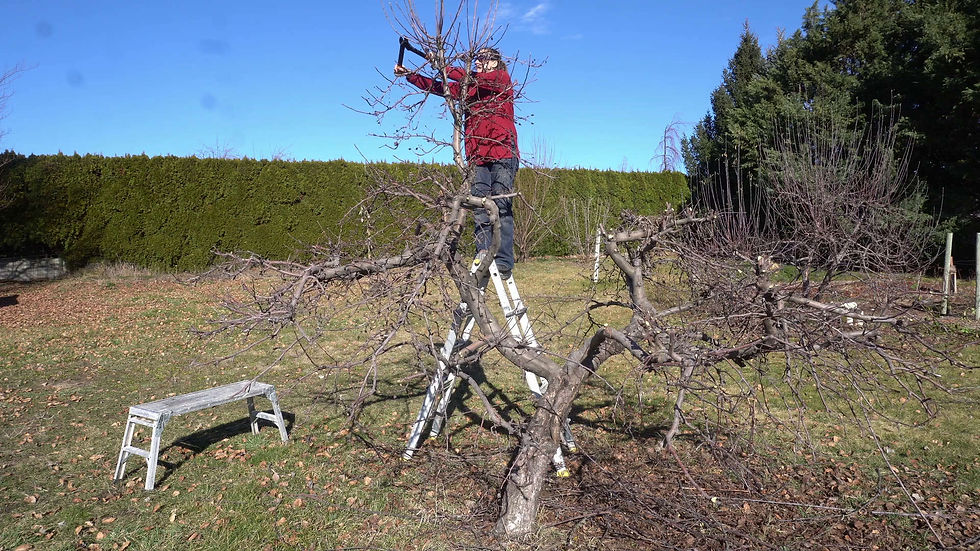
Keep the central leader as the tallest, strongest vertical branch. Remove competing leaders or branches that grow too upright. Scaffold branches should be spaced evenly around the tree and angled outward at about 45 to 60 degrees. If a scaffold branch grows too steeply, prune it back to encourage a better angle. Sometimes due to wind, etc. trees can have an interesting structure and have to be dealt with on a case by case basis.
5. Shorten Long Branches

Cut back overly long branches to encourage new growth closer to the trunk. This helps keep the tree compact and easier to manage. Make cuts just above an outward-facing bud to direct growth away from the center.
Tips for Making Clean Cuts
Cut at a slight angle, about ¼ inch above a bud or branch collar.
Avoid leaving stubs, which can invite disease.
Use sharp tools to make smooth cuts that heal quickly.
Disinfect tools between cuts, especially if you see signs of disease.
After Pruning Care
Once pruning is complete, clean up all debris around the tree to prevent pests and diseases. Applying a balanced fertilizer in early spring can support new growth. Water the tree well during dry periods, especially after pruning.
Common Mistakes to Avoid
Over-pruning: Removing too much can stress the tree and reduce fruit production. Aim to remove no more than 30% of the tree’s canopy in one season.
Ignoring the tree’s natural shape: Prune to enhance the tree’s structure, not reshape it completely.
Cutting too close or too far from the branch collar: Both can harm the tree’s ability to heal.
Pruning at the wrong time: Avoid heavy pruning in summer or fall.
Benefits of Proper Pruning

Pruning your apple tree correctly leads to:
Stronger branches that support heavy fruit
Better fruit size and quality
Reduced risk of disease and pest problems
Easier harvesting and maintenance
Taking the time to prune your apple tree each year pays off with healthier trees and a more abundant harvest.





Comments