



How to Prune Tomato Plants for Higher Yield and Fewer Pests

A tomato plant can go from tidy to tangled in what feels like a week. One day it is a neat little transplant. Soon it is a leafy jungle, full of side shoots, low branches, hidden fruit, and places where pests can settle in.
Pruning fixes that. Done well, it gives the plant a cleaner shape, improves airflow, makes harvesting easier, and helps direct energy toward fruit instead of endless leafy growth. The basic idea is simple: remove the suckers you do not want, keep the main growing tip, and clear the lower branches away from the soil.
That last part matters. Tomato leaves that touch or hang near the ground pick up soil splash, moisture, and pests. A little pruning early can prevent a lot of problems later.
Start by knowing what kind of tomato plant you have
Before cutting anything, figure out whether the plant is indeterminate or determinate. This changes how hard you should prune.
Indeterminate tomatoes keep growing taller through the season. Many cherry tomatoes, slicers, and heirlooms fall into this group. These plants can benefit the most from steady pruning because they keep making new vines, leaves, flower clusters, and suckers.
Determinate tomatoes grow to a set size, produce much of their crop in a shorter window, then slow down. Many paste tomatoes and compact patio types are determinate. These plants need a lighter hand because pruning too much can remove fruiting branches and reduce the harvest.
If the plant tag says “vining,” “staking,” or “indeterminate,” plan to prune more. If it says “bush,” “patio,” or “determinate,” prune mainly for airflow and soil clearance.
A good rule is this:
Indeterminate tomatoes
Determinate tomatoes
Prune suckers regularly, train one to three main stems, remove lower branches, and support the plant well.
Remove damaged leaves and low soil-touching branches, but avoid heavy sucker removal.
For most home gardens, the pruning method in this guide works best for indeterminate tomatoes. It is the classic approach for anyone who wants more controlled growth, fewer tangled vines, and easier picking.
The goal is not to strip the plant bare. Tomatoes need leaves to feed the fruit. The goal is to create a plant with enough foliage for photosynthesis and enough open space for light, air, and access.
Remove suckers before they take over
Suckers are the small shoots that grow in the “V” between the main stem and a leaf branch. That spot is called the leaf axil. Left alone, each sucker can become a whole new stem with its own leaves, flowers, and fruit.
That sounds useful, but too many suckers can turn one tomato plant into a dense thicket. The plant becomes harder to support. Fruit hides inside the foliage. Airflow drops. Leaves stay wet longer after rain or watering. Pests get more shelter.
For more controlled growth, remove suckers while they are small. The best time is when they are a few inches long and still soft enough to pinch off with your fingers.
To remove a sucker:
Find the main stem.
Look for a leaf branch coming out from that stem.
Check the angle where the leaf branch meets the stem.
Pinch out the small new shoot growing from that angle.
Leave the main stem and true leaf branch in place.
Do not cut off the top growing point by mistake. The top of an indeterminate tomato is where the plant continues to grow upward. If you remove it early, the plant stops gaining height from that stem. Later in the season, topping can be useful, but early on, it limits the plant before it has built enough structure.
This is where many gardeners get nervous. A sucker and the main top can look similar when plants are young. If you are unsure, wait a day or two and look again. The main top usually continues straight upward. A sucker grows from the side joint between the stem and a leaf branch.

For a strongly controlled plant, train it to one main stem by removing nearly all suckers. This works well when plants are grown close together on string, stakes, or in a narrow bed. It also makes pruning and harvesting simple.
For a slightly fuller plant, keep one or two strong suckers low on the plant and train them as extra stems. Many gardeners use a two-stem or three-stem system because it gives more fruiting sites while still keeping the plant manageable.
A balanced pruning plan often looks like this:
One main stem for tight spacing, tall supports, or maximum control.
Two stems for a mix of control and production.
Three stems for a fuller plant with good support and enough room.
More stems can mean more total fruit sites, but it can also mean smaller fruit, more foliage, and more crowding. Fewer stems often produce larger, easier-to-find fruit and cleaner plants. The best choice depends on your garden space, support system, and climate.
If the weather is very hot, avoid removing too many leaves at once. Tomato fruit can sunscald when suddenly exposed to strong afternoon sun. Prune gradually, and leave enough leaf cover to protect developing fruit.
Clear the lower branches to reduce pests and disease
Lower branches are often the first to cause trouble. They droop into mulch, touch damp soil, or sit in the splash zone when rain hits the ground. That puts leaves close to fungal spores, insects, and excess moisture.
Removing the lowest branches gives the plant a clean trunk at the base. It also makes watering, mulching, and inspecting easier.
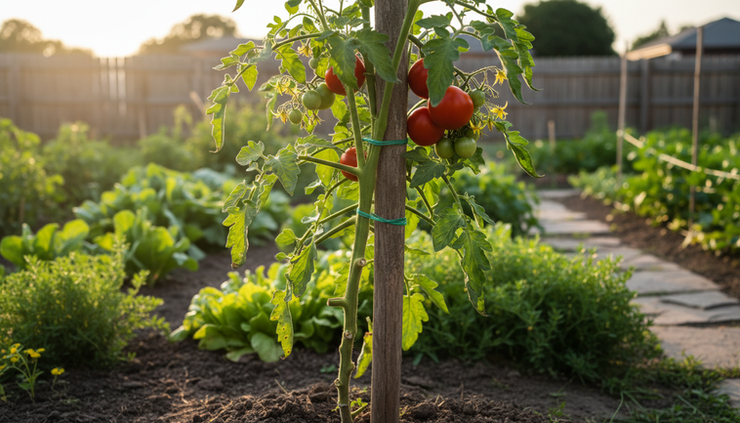
A good target is to clear leaves from the bottom 8 to 12 inches of the plant once it is established and growing strongly. For taller plants, you can gradually raise that clearance as the plant grows, especially if the lower leaves begin to yellow or crowd the soil.
Do not remove all lower growth from a tiny transplant right away. Young plants need leaves to build energy. Wait until the plant has settled in, started new growth, and has enough upper foliage to keep feeding itself.
Lower branch pruning helps in several ways:
Less soil splash
Rain and overhead watering can bounce soil onto leaves. Keeping leaves off the ground lowers that risk.
Fewer pest hiding spots
Dense, low foliage gives slugs, flea beetles, and other pests more cover.
Better airflow
Open space below the plant helps leaves dry faster after wet weather.
Cleaner harvests
Fruit stays easier to see and less likely to rest on the ground.
Use clean pruners for thicker branches. For small, soft growth, fingers are fine. If a branch is tough, do not rip it downward. That can peel the stem and leave a wound. Cut it cleanly near the main stem without gouging the trunk.

Avoid pruning while plants are wet. Wet foliage can spread disease more easily from plant to plant. Morning is usually a good time because cuts can dry during the day. If rain is coming, wait.
Sanitize pruners if you move between plants, especially if one looks diseased. A simple wipe with rubbing alcohol between plants can help reduce spread. Also remove pruned leaves from the bed instead of leaving them piled under the plant.
Support the plant as you prune
Pruning and support work together. A pruned tomato still needs a strong structure, and a supported tomato is much easier to prune.
Stakes, cages, and string trellises can all work. The right choice depends on how many tomatoes are growing and how much time you want to spend managing them.
For a single-stem tomato, a tall stake or vertical string works well. Tie the main stem every 8 to 12 inches as it grows. Use soft ties, garden twine, cloth strips, or tomato clips. Keep ties loose enough that the stem can expand.
For a two-stem or three-stem plant, a larger cage or multiple strings may work better. Each main stem needs space and support. If stems cross and rub against each other, choose the strongest ones and remove the weaker, crowded growth.
A good pruning session often follows this order:
Tie up the main stem first.
Remove small suckers that compete with the trained stems.
Cut off low branches that touch or nearly touch the ground.
Remove yellow, damaged, or diseased leaves.
Step back and check the shape before cutting more.
That last step saves plants. It is easy to get carried away once the pruners are in hand. After a few cuts, pause. Look at the plant from the side and from above. You want an open plant, not a bare pole.
The top of the plant deserves special attention. Do not remove the growing tip during normal early and midseason pruning. That top shoot is the plant’s upward growth point. If you cut it by mistake, the plant may send out a side shoot to replace it, but growth slows and the shape gets less predictable.
Late in the season, topping is different. If frost is a few weeks away and the plant already has plenty of green fruit, cutting the top can help stop new growth that will not have time to mature. But that is a late-season choice, not part of routine sucker removal.
Pruning tomatoes at the right time and avoiding the common mistakes
Tomato pruning is not a one-time chore. It works best as a light weekly habit. Small cuts heal faster, and small suckers are easier to pinch than thick stems.
Check plants once or twice a week during active growth. Warm weather and steady watering can push fast new growth, especially on indeterminate varieties. A five-minute walk through the tomato bed can keep plants from getting away from you.
The best time to prune is on a dry day, preferably in the morning after dew has dried. Dry leaves are cleaner to handle, and cuts have time to dry before evening moisture returns.
Avoid these common mistakes:
Removing too many leaves
Leaves feed the plant and shade fruit. Keep enough healthy foliage to support growth.
Pruning determinate tomatoes too hard
Heavy pruning can remove branches that would have produced fruit.
Cutting off flower clusters by accident
Suckers grow from the leaf joint. Flower clusters usually form along the stem and carry tiny buds.
Letting suckers get too large
Large suckers leave bigger wounds and can take over the plant structure.
Pruning wet or diseased plants without cleaning tools
This can move problems through the garden.

Pruning also fits into the bigger care routine. Water at the base of the plant instead of soaking the leaves. Add mulch to reduce soil splash and keep moisture more even. Feed plants consistently, but avoid overdoing nitrogen, which can push lots of leafy growth at the expense of fruit.
A well-pruned tomato plant should look open but healthy. You should be able to see the main stem. Air should move through the plant. Fruit clusters should be visible without digging through a wall of leaves. The lower stem should be clear of the soil, and the plant should be tied securely to its support.
Keep the structure simple. Remove suckers before they become stems you do not need. Clear the bottom growth. Protect the top growing point. Then repeat lightly through the season.
The payoff is a tomato plant that is easier to manage, easier to harvest, and less inviting to pests. Start with one plant, prune it carefully, and watch how it responds. Once you see the shape you want, the rest of the row becomes much easier.




Comments